
A Young Ruler Learns to Act
I ChingThis flow follows the figure of youthful inexperience as a sequence of discipline, teaching, refusal, and responsible correction.
increasing Bearing strength in each event
 decreasing
Bearing strength in each eventdecreasingIgnorance Is Identified
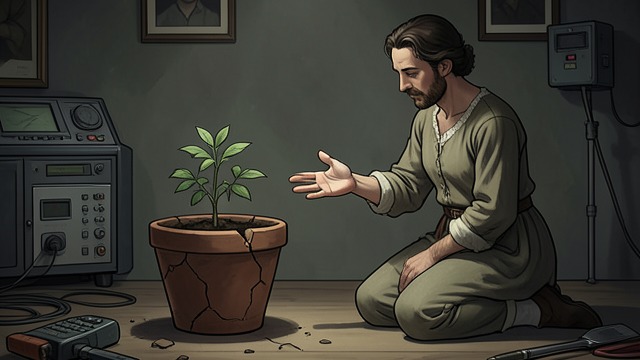
A Condition of Inexperience
The young and unformed
The hexagram represents youthful ignorance, likened in Legge's note to a plant not yet fully grown. Its opening judgment describes a learner seeking instruction.
The condition is not treated as a permanent defect, but as a stage requiring the right response.
Teaching has terms
The teacher does not chase the student; the inexperienced person must sincerely seek guidance. Repeated, unserious consultation becomes troublesome.
The first step toward maturity is an honest willingness to learn.
Discipline Opens the Mind
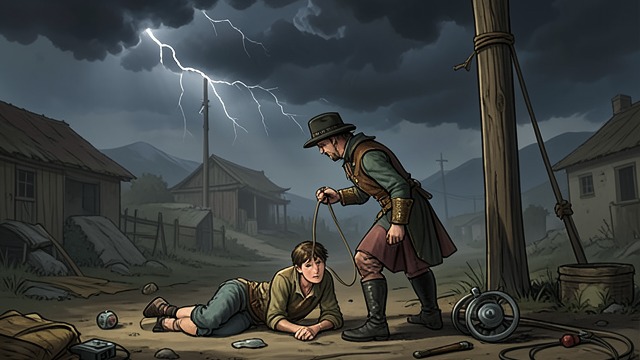
Correction at the Beginning
Punishment as a limit
The first line permits punishment to dispel ignorance and remove restraints on understanding. Legge explains that continued punishment, however, becomes a source of regret.
The measure is directed at correction, not at violence for its own sake.
A temporary remedy
Discipline may help when a learner's confusion prevents instruction from taking hold. It fails when it becomes the whole educational method.
The line asks authority to distinguish effective correction from the impulse to control.
The Teacher Shows Forbearance

Instruction With Patience
Strength in a central place
The second line depicts a strong, central figure teaching the ignorant with forbearance. Legge emphasizes the teacher's capacity to receive and instruct those who are inexperienced.
The role includes patience as well as authority.
Responsibility beyond instruction
The line also evokes a son capable of carrying his family's responsibilities. Education matters because it prepares a person to sustain others, not merely to acquire information.
The learner's development is connected to a future public and household role.
False Confidence Is Rejected
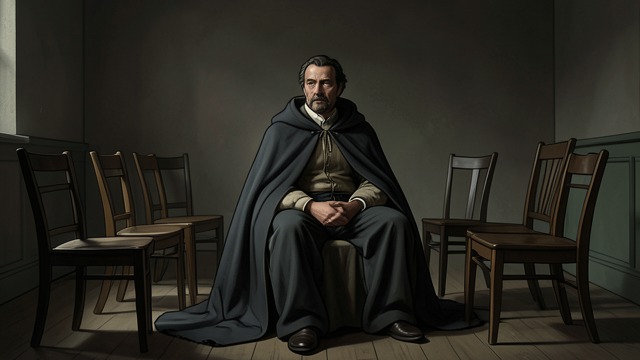
Learning Can Go Wrong
Desire without judgment
The third line warns against a person drawn by wealth or advantage without regard for proper conduct. Legge reads the image as a warning about character, not simply a lack of knowledge.
Wanting instruction is not enough if desire directs the learner toward harmful attachments.
Isolation deepens confusion
The fourth line shows a subject bound in ignorance and cut off from useful help. Legge sees little in the position to correct itself.
Together, the lines show how vanity and isolation can prevent the growth that teaching makes possible.
Force Gives Way to Protection
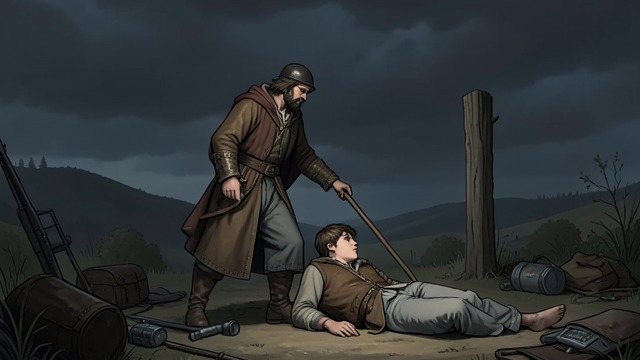
Restraining Harm
The limit of coercion
The final line depicts striking the ignorant youth but warns against injuring him. Legge contrasts violence with preventing harm.
The teacher's authority reaches its proper form when it protects rather than humiliates.
An incomplete resolution
The learner's ignorance may not vanish at once. The text offers a better direction for correction, not a promise of instant maturity.
The flow ends with responsibility shared between the learner who must seek guidance and the teacher who must not abuse power.
At the opening of the Youthful Folly hexagram
At the first line of the Youthful Folly hexagram
At the second line of the Youthful Folly hexagram
At the third and fourth lines of the Youthful Folly hexagram
At the final line of the Youthful Folly hexagram
